Online Courses in AI, Cybersecurity, Mathematics & More
Welcome to Serious Courses!
Your gateway to a Celestial Library of Learning. Here, each course is a star in a vast constellation of knowledge, handpicked for seekers of mastery. Some glimmer behind paywalls, others shine freely in the open sky—but all are portals to deeper understanding. Know of a course that belongs among these stars? Whisper it to us at support@seriousmindware.com. The archive expands with every voice.
From the Serious Courses blog.
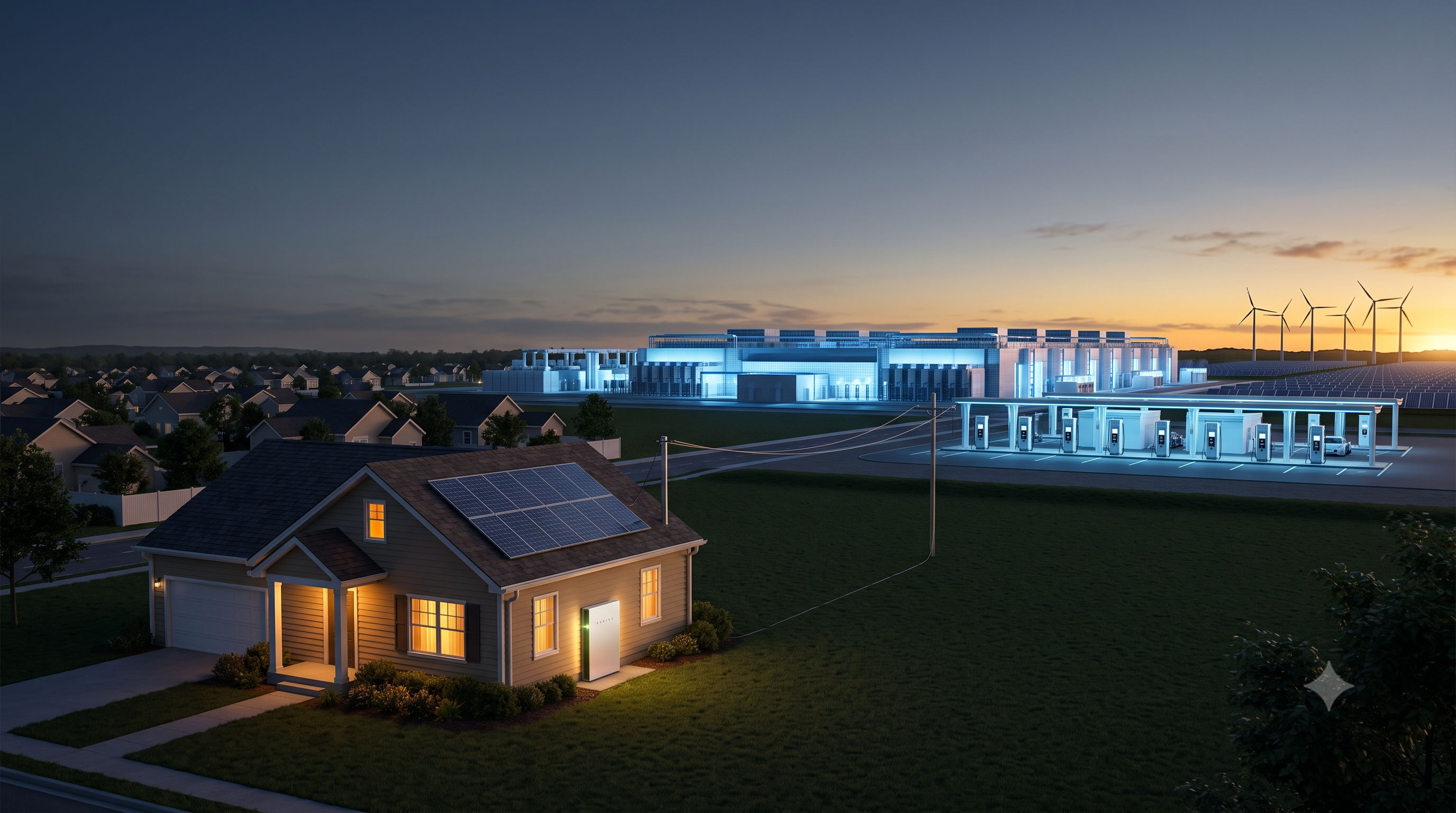
⚡ Why Everyday Ratepayers Are Subsidizing Tech's Power Boom
Serious Courses! If you've opened your electric bill lately and felt a sudden spike in your blood pressure, you're not alone. Scroll through Facebook or Nextdoor on any given afternoon and you'll see the same chorus of confusion and outrage: "My habits haven't changed, so why is my utility bill 30% higher than it was a couple of years ago?"
People feel like they're being squeezed. And frankly, they are. Since 2020, the average U.S. residential electricity rate has climbed from about 12.8 cents per kilowatt-hour to nearly 19 cents — a rise of more than a third in six years. In regions dense with data centers, it's considerably worse. We'll get to why.
Source: Utility Dive — U.S. retail electricity prices, EIA data (February 2026).But first, let me tell you what happened when I tried to opt out.
My $600-a-Month Experiment in Grid Independence
Like many of you, I wanted to take back control. Having already installed solar panels, I decided to double down: two Tesla Powerwalls to hedge against rising rates and power my EV.
Did it work? On paper, yes. My monthly electric bill dropped to under $100.
Here's the reality behind the curtain:
| Old Way: Traditional Utility Bill | New Way: Defensive Energy Setup | |
|---|---|---|
| Utility bill | High, unpredictable rate hikes | Under $100/month |
| Powerwall payment | — | $531/month |
| Solar loan | — | $47/month |
| Public fast-charging fees | — | Added on top |
| Control over costs | None | Total: higher, but predictable |
By investing in home energy storage, I capped my utility bill and gained predictability — but my total monthly outlay for energy is actually higher than before the transition. I traded unpredictable rate hikes for predictable loan payments.
What the Table Doesn't Show: The Lights Stay On. There's one benefit that doesn't fit in a cost column: resilience. Since the Powerwalls went in back in August 2024, my home has ridden through every grid outage without a flicker.
The one exception is almost too ironic to believe: the only real disruption I've had was caused by the utility itself. When NYSEG upgraded the transformers on my street, the work knocked out my grid gateway — taking my Powerwalls offline during the coldest stretch of the year, February into March 2026. It took about a month before Tesla could get their electricians out to fix the problem NYSEG had created. In the meantime, we had an electrician install a power-inlet plug so a gas generator could back up the batteries.
The lesson stuck with me. We now have grid independence plus a backup for any failure in the connection to the grid — a belt-and-suspenders setup the utility can't take down. But notice what it took to get here: solar panels, two battery walls, an electrician visit, and a generator. Energy security shouldn't require a five-figure obstacle course.
Taking control of your own power feels empowering. But it shouldn't require tens of thousands of dollars in personal battery infrastructure just to keep your local utility from draining your wallet. So why are rates climbing this fast in the first place?
Section 1: The Hidden Hand — How AI and EVs Strain the Grid
Two major technology shifts are demanding electricity in fundamentally different ways.
AI Data Centers: The Infinite 24/7 Baseload. Traditional cloud data centers consume significant power, but AI-dedicated facilities operate on an entirely different scale. Training and running large language models requires server racks pulling 30 to 100+ kilowatts each — up to ten times the power density of standard servers, and the newest AI racks now exceed even that. Unlike a factory that shuts down at night or an office that goes dark on weekends, AI data centers run at maximum capacity 24/7/365.
The regional concentration is staggering. Data centers now consume roughly 40% of Virginia's electricity, up from less than 5% in 2010, and the state's energy demand is projected to rise 183% by 2040 — versus just 15% without data center growth. Single developments in Virginia, Ohio, Georgia, and the Pacific Northwest are requesting hundreds of megawatts, sometimes equivalent to the power needs of an entire mid-sized city.
Watch: Bloomberg's investigative reporting traces exactly how AI data center demand flows through the grid and onto household electric bills.
EV Fast Charging: The Sharp Peak Spikes. While AI creates an endless baseline demand, electric vehicles create sudden, concentrated spikes. A residential Level 2 charger draws roughly 7–11 kW, but public DC fast chargers pull anywhere from 50 kW to 350 kW per plug. When commuters rush home at 6 PM, plug in, and run their AC or heat at the same time, local substations face massive load surges.
Here's the engineering problem: grids aren't built for average usage. They must be engineered to survive the single highest-demand hour of the year without blackouts. Designing for sharp EV peaks means massive transformer and substation upgrades — and somebody has to pay for them.
Watch: MotorTrend's documentary on America's EV transition, including the charging-infrastructure and grid-strain chapters that back up the peak-load problem above.
Section 2: The Accounting Trap — Why Everyday Ratepayers Suffer
If Amazon, Microsoft, or a commercial charging network needs more power, why doesn't their bill reflect the full cost of that grid expansion?
It comes down to a legacy utility accounting mechanism known as rate socialization (or "rate-basing"):
1. Tech giants and fast-charging networks demand gigawatts of new grid capacity.
2. Utilities spend billions building new substations, wires, and power plants.
3. Regulators allow utilities to fold those capital costs into the "rate base."
4. The multi-billion-dollar bill is divided among all local households.
5. Result: your bill surges, regardless of your personal energy use.
The numbers coming out of PJM — the grid operator serving 65 million people across 13 states and D.C. — make the cost-shift impossible to deny:
• PJM's July capacity auction cleared at $329 per megawatt-day — a roughly 1,000% jump from two years earlier. Reuters reports that data centers make up more than 90% of the new power demand PJM expects by decade's end.
Source: Reuters, via TradingView — power costs soar in PJM region as data center demand spikes.• PJM's independent market monitor found that data centers were responsible for 63% of the price increase in the 2025/2026 capacity auction — roughly $9.3 billion recovered from ordinary customers through higher rates.
Source: IEEFA — projected data center growth spurs a ten-fold jump in PJM capacity prices.• Analysts at ICF project that PJM residential rates could rise 30% to 60% by 2030, largely due to these capacity auctions.
Let that 63% figure sink in. Nearly two-thirds of the price surge in America's largest grid region traces directly to data center demand — and under current accounting, everyday households absorb it. Consumers are effectively acting as low-interest lenders and cost-subsidizers for corporate grid expansion.
Watch: CBS News covers Bloomberg's reporting that AI demand is driving up energy costs for everyday Americans.
Section 3: The Fair Fix — Mandating "Bring Your Own Clean Power" (BYOP)
The solution isn't to stop technological progress or freeze the EV transition. The solution is changing who pays for the infrastructure — by mandating Bring Your Own Power (BYOP) policies for massive energy consumers.
| Industry | Off-Grid / Near-Grid Green Solution |
|---|---|
| AI data centers | Co-located "energy parks": dedicated solar, wind, advanced geothermal, or SMRs, paired with battery energy storage |
| EV fast-charging hubs | Solar canopies paired with local Battery Energy Storage Systems (BESS) to buffer grid draw during peak hours |
1. Data Centers Must Co-Locate Clean Energy. Instead of plugging into residential utility grids and forcing utilities to build multi-billion-dollar gas plants or extend aging coal facilities, hyperscalers should build co-located energy parks. By pairing dedicated solar, wind, or geothermal generation directly with large battery arrays "behind the meter," AI workloads can run on self-generated clean power without straining the local community's grid.
2. EV Chargers Need Solar Canopies and Battery Buffers. Fast-charging hubs can install overhead solar canopies paired with BESS. The batteries charge slowly from off-peak grid energy or solar throughout the day; when a vehicle plugs into a 350 kW fast charger, the energy pulls directly from the on-site battery — eliminating demand spikes on local transformers.
There's a bonus here that goes beyond cost: distributed generation and storage make the whole grid more resilient. A decentralized grid of "islands" — local generation, local storage, local load — means a failure in one region doesn't cascade into everyone else's blackout.
I've seen this work from my own basement. Through the Tesla Virtual Power Plant and the NYSEG & RG&E Energy Storage Solutions program, my Powerwalls participated in a grid event during the peak warmth of July — charging beyond our own needs and supplying energy back to the grid when demand spiked. My home batteries did — in miniature — exactly what I'm proposing data center and charging-hub batteries should do at scale: absorb energy when the grid has plenty, and give it back when the grid is gasping. If a residential setup can do this, a hyperscaler with a battery park certainly can.
Watch: Matt Ferrell makes the case that the grid's future isn't more giant power plants — it's decentralization, the technical backbone of the BYOP argument above.
3. Implement "Large-Load Tariffs" — and Here's the Good News: It's Already Starting. This idea is no longer hypothetical. The fight is underway right now:
• Virginia approved a new electricity rate class for large-scale customers like AI data centers in November 2025. Starting January 2027, affected customers must pay for at least 85% of their contracted distribution and transmission demand — whether they use it or not.
• Virginia's SB 253 would go further, shifting distribution and capacity-auction costs from households to data centers drawing 25 MW or more. The state regulator estimates it would cut residential rates 3.4% while raising data center rates about 15.8%.
• Oregon became the first state to create a dedicated data center rate class, and at least eight other states introduced similar measures in 2026.
• Even federal regulators are moving: FERC issued show-cause orders to six major grid operators in June 2026, giving regions 60 days to propose reforms to the cost-socialization rules that currently force these expenses onto everyone.
State Public Utility Commissions should finish the job: any commercial entity requesting more than 5–10 megawatts should pay 100% of its upfront interconnection and grid-upgrade costs, so those expenses never leak onto residential bills.
Section 4: The Oil Shock — Why the EV Wave Is Arriving Faster Than Planned
If you thought grid strain from EVs was a slow-motion, someday problem, geopolitics just hit the accelerator.
The war with Iran that began in late February 2026 severely disrupted oil flows through the Strait of Hormuz — the chokepoint carrying roughly a fifth of the world's oil and LNG. Oil has traded above $100 a barrel, and national average gas prices have pushed past $4 a gallon, up roughly 21% from a year ago, with analysts warning prices could climb significantly higher if disruptions persist.
The consumer response has been immediate and visible. I've personally watched people who swore they'd never drive an EV pull into their driveways in one — and many more hedging with hybrids to escape the pump. The data confirms it's not just my neighborhood: used EV wholesale values jumped 12% year-over-year in July, versus just 1.7% for gas vehicles, a surge Cox Automotive attributes directly to the war and high gas prices. Car-selling platforms across the U.S. and Europe report sharp increases in EV interest since the conflict began.
(One honest wrinkle: with federal tax credits gone, new U.S. EV sales actually declined this year — the surge is flowing through the used market and hybrids. But globally, EV and plug-in hybrid sales are headed for a record 23 million, roughly 28% of all vehicle sales.)
Every oil shock in history has pushed drivers toward whatever doesn't burn oil. Each converted driver is a new load on the grid — another Level 2 charger in a garage, another fast-charging session on the highway. The EV demand curve that utilities penciled in for the 2030s is being dragged into the present by events half a world away. Which means the question of who pays for the grid upgrades isn't a future policy debate. It's due now.
Watch: A British perspective on whether the grid can cope with accelerating EV adoption — a reminder that the oil-shock-driven EV surge is straining grids on both sides of the Atlantic.
Section 5: The Climate Stakes — Why "Clean" Is the Non-Negotiable Part of BYOP
There's one more reason this matters, and it's bigger than anyone's monthly bill.
In 2024, for the first time, the global average temperature for a full calendar year exceeded 1.5°C above pre-industrial levels. A single hot year doesn't formally breach the Paris Agreement — that's measured over 20-year averages, and long-term human-caused warming currently sits around 1.34–1.41°C. But the trajectory is sobering: Copernicus, the EU's climate service, now expects the world to cross sustained 1.5°C warming before the end of 2029 — more than a decade earlier than scientists projected when the Paris accord was signed.
Here's the connection to your electric bill: when utilities scramble to meet data center demand, the fastest options are often the dirtiest — extending the life of coal plants slated for retirement and fast-tracking new natural gas peakers. If we let the AI boom and the EV transition get powered by fossil expansion, we're not just socializing the costs onto ratepayers; we're socializing the carbon onto everyone.
That's why the "clean" in Bring Your Own Clean Power isn't decoration — it's the point. BYOP mandates turn the largest new sources of electricity demand into the largest new buyers of solar, wind, geothermal, and storage. The same buildout that's currently inflating your bill and our emissions could instead become the biggest clean-energy accelerant in history. The technology boom and the climate can both win — but only if growth is required to bring its own clean power.
Watch: A clear-eyed, ten-minute look at where the world actually stands on the 1.5°C target.
Conclusion: Taking Back Control
Investing in home energy independence — solar panels, battery backups, smart thermostats — is a valid hedge against unpredictable utility spikes. I've done it myself, and I'd do it again. But personal capital investments shouldn't be the only shield consumers have against corporate grid strain.
By demanding large-load tariffs and requiring AI data centers and EV charging hubs to bring their own clean power, we can ensure that technological innovation funds its own growth — leaving everyday ratepayers with fair, predictable, manageable electric bills, and leaving the planet with a fighting chance at its climate targets.
The precedents are being set in Virginia and Oregon right now. Call your state's Public Utility Commission. Growth should pay for growth.
Footnotes: Further Watching
Want to go deeper on the AI, EV, and grid angles above? These are worth your time:
Money Decode: AI Is Driving Up Electricity Bills—And You May Pay the Price.The Center Square: Americans Are Paying the Price for AI's Massive Power Demand.
PBS Terra and Floodlight News: We Saw What AI Data Centers Don't Want You to See.
EV Pulse: Will EVs Kill the Power Grid? | EV Basics.
CNBC: How Norway Built An EV Utopia While The U.S. Is Struggling To Go Electric.
Undecided with Matt Ferrell: EV charging explained - Will EVs kill the grid?
PBS NewsHour: How data center power demand could help lower electricity prices.
Energy Central: Can Data Centers Actually Lower Your Electric Bill?
Footnotes: Further Reading
The data and policy sources behind the numbers above:
Introl — Virginia SB 253 and the data center electricity rate shift (2026).American Action Forum — Virginia's new data center electricity rate class.
Introl — PJM rate shock: $100 billion in data center electricity costs (2026).
Washington Post — gas prices poised to climb further as markets price in Iran disruption.
CNBC — used EV prices climb amid the gas price war (July 2026).
CNBC — EVs, autos, and energy amid the Iran war and fossil fuel disruption.
Yahoo Finance — the global EV boom barrels on.
World Resources Institute — the 1.5°C target, explained.
Climate Change News — Copernicus scientists on crossing the 1.5°C limit.
You can explore the full list of Economics videos and courses here:
Economics Courses and VideosKnow of a great source on utility rate policy, grid economics, or the AI/EV power story that should be included? Send it our way at support@seriousmindware.com — we'll add it to the collection.
Contact Us
Questions or feedback about anything? We'd love to hear from you.
You can reach us at: support@seriousmindware.com